
.png)
-
Implementation Period: Nov 2021 – May 2022
-
Location: Raqqa and Deir ez-Zor, Syria
-
Donor: Essential Services Program / USAID
-
Direct Beneficiaries: 3,000 individuals
-
Indirect Beneficiaries: 35,000 community members
Project Overview
The Supporting and Enhancing Decent Work Opportunities for Women and Youth project was implemented in Raqqa and Deir ez-Zor to promote rights-based livelihoods, social accountability, and inclusive economic participation in post-conflict settings. The project focused on strengthening participants’ understanding of labor rights, civic responsibilities, and their relationship with local authorities, while enhancing practical skills and employability—particularly for women and youth engaged in agricultural and vocational sectors.
By combining labor rights awareness, agricultural extension, vocational training, and structured engagement with decision-makers, the project addressed both the supply and governance dimensions of decent work. It aimed not only to improve individual livelihoods, but also to contribute to a more enabling environment for fair labor practices, protection, and community-level accountability.
Objectives
The project sought to empower participants—particularly farmers, women, and youth—through a realistic and practical understanding of their labor rights and responsibilities, as well as the mechanisms available to engage with local authorities and community structures. It aimed to strengthen capacities in strategic planning, mobilization, and advocacy, enabling participants to articulate needs, identify challenges, and contribute to locally grounded solutions.
In parallel, the project worked to enhance employability and income-generation opportunities through agricultural vocational training and skills development, while promoting decent work standards and protective frameworks across targeted communities.
Key Interventions
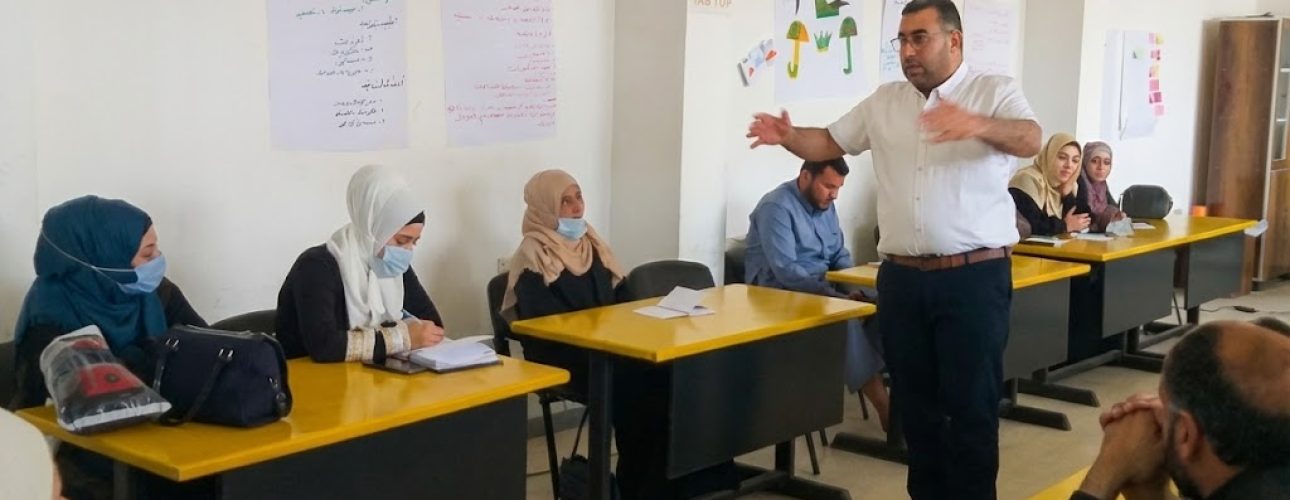
The project delivered six days of focused training on labor rights, complemented by six workshop days dedicated to analyzing labor-related challenges and jointly identifying practical solutions. To strengthen institutional dialogue and accountability, fifty-three meetings were held with decision-makers, alongside structured interviews with eight hundred key stakeholders to inform advocacy efforts and policy engagement.
On the livelihoods side, one hundred agricultural extension and guidance sessions were conducted, benefiting approximately 2,500 farmers with practical knowledge to improve productivity and sustainability. Additionally, seventy days of vocational training were implemented across four professions, targeting one hundred participants—many of them women and youth—to enhance employability and income-generation opportunities. Vocational and agricultural tools were distributed to one hundred individuals to support the practical application of acquired skills.
To reinforce protection and ethical standards, two hundred stakeholders formally signed a Code of Conduct and Protection Policy. A large-scale labor rights awareness campaign complemented these efforts, involving the distribution of six thousand posters, the creation of twenty murals, and the installation of ten billboards to promote decent work principles at the community level.