
.png)
- Implementation Period: September 2017 – August 2019
- Location: Raqqa, Syria
- Partners: C4REF & COSV
- Direct Beneficiaries: 2,500 children and adolescents
- Indirect Beneficiaries: 25,000 community members
Project Overview
The Virtual Education Platform Project – Youth College was implemented to provide safe, child-friendly, and adaptive learning opportunities for children and adolescents in Raqqa during a period of severe educational disruption. The project targeted children and youth aged 1 to 18 years, addressing both immediate educational needs and longer-term capacity development for adolescents.
Beyond access to learning, the project adopted a developmental approach that viewed adolescents as active agents of change rather than passive beneficiaries. By combining virtual education tools with psychosocial support and civic engagement components, the initiative aimed to nurture a generation of young people equipped with the skills, confidence, and awareness needed to contribute positively to their communities.
Objectives
The project sought to ensure access to inclusive and protective learning environments that respond to the psychosocial and educational needs of children affected by conflict. It aimed to equip learners with essential educational tools while supporting their emotional well-being and social development.
For adolescents, the project focused on capacity development and leadership empowerment, strengthening skills related to community engagement, initiative design, and advocacy, with the goal of fostering future community leaders capable of responding constructively to local challenges.
Key Interventions
A virtual education platform was designed and developed specifically for adolescents, providing flexible learning opportunities adapted to the local context and constraints. This platform served as a core educational tool, complementing in-person activities and expanding access to learning resources.
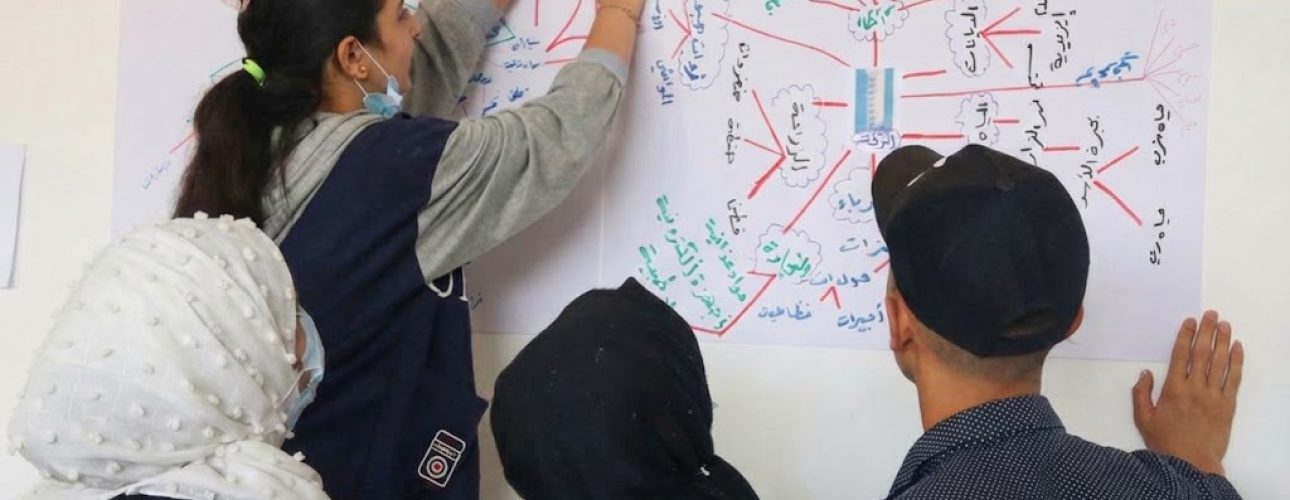
Classroom-based sessions were delivered focusing on psychosocial support, helping children and adolescents develop coping mechanisms, resilience, and positive social interaction. In parallel, adolescents received training on community initiatives and advocacy campaigns, enabling them to identify local issues, design responses, and engage with their communities in meaningful ways.
To translate learning into practice, the project supported the implementation of small-scale local initiatives led by adolescents themselves, reinforcing leadership skills, collective responsibility, and civic engagement through real-world action.